Why More Drum and Bass Producers Are Leaving Social Media Quietly
More drum and bass producers are stepping back from social media, replacing constant visibility with dub culture, private channels, and slower connection.
For years, drum and bass artists were told the same thing: stay visible or disappear.
Post clips constantly. Feed the algorithm. Turn every studio session into content. Build personality alongside music. Ideally daily. Preferably vertical.
Some producers played the game well. Others tolerated it because they felt they had to. But lately, there has been a noticeable shift across parts of the scene, especially among deeper, techier, and more underground artists. Not dramatic exits. Not farewell posts. Just gradual silence.
Less posting. Fewer reels. More disappearing for months at a time, then returning with a dubpack or a release announcement and little else.
In drum and bass, that kind of withdrawal changes the atmosphere around an artist almost immediately.
The underground never fully belonged to algorithms anyway
Drum and bass has always had an awkward relationship with visibility.
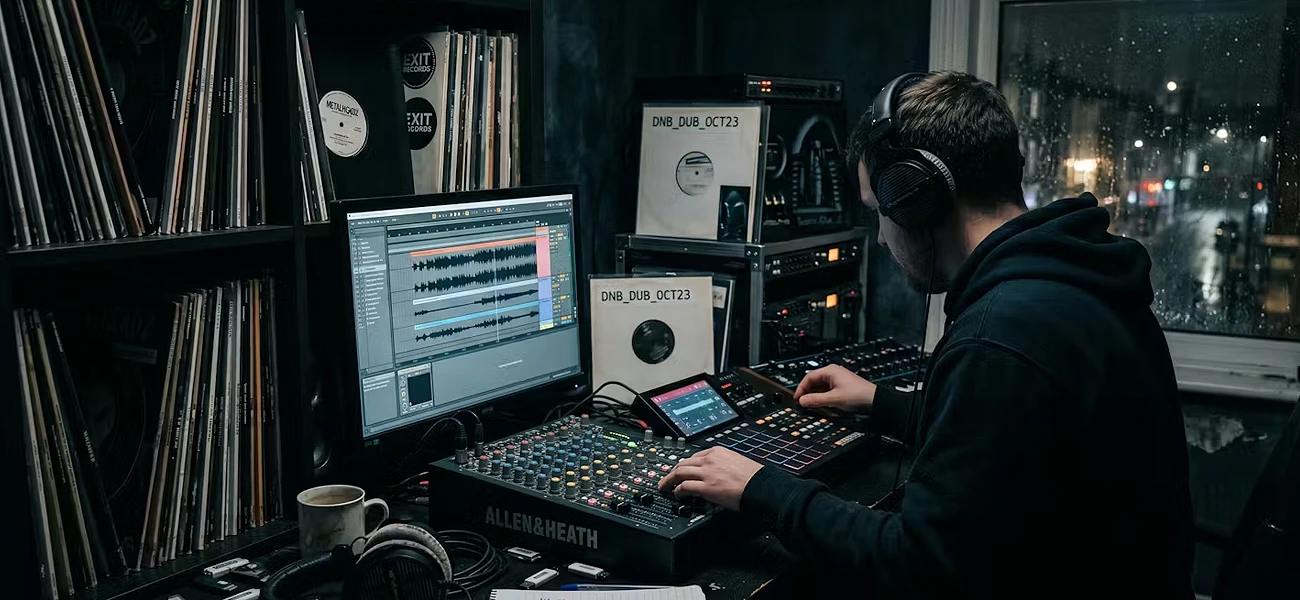
The culture grew through pirate radio, dubplates, white labels, forums, USB swaps, late-night record shop conversations, and tracks that existed in sets long before they appeared online. Scarcity mattered. Mystery mattered. Sometimes the only proof a tune existed was hearing it once at 2am in a packed room and spending weeks trying to identify it afterwards.
That instinct never disappeared completely, even during the peak social media years.
You can still feel it in the way DJs guard certain dubs, or how some labels quietly circulate promos to a trusted circle rather than blasting previews across every platform immediately. Drum and bass still values discovery in a way many genres no longer do.
Now that online visibility has become constant and exhausting, parts of the scene seem to be drifting back towards that older rhythm naturally.
Not backwards. Just narrower. More controlled.
Dub culture still carries weight
There is also a practical reality underneath this.
A producer can spend hours building clips for Instagram and barely shift the needle. Meanwhile, one unreleased track passed to the right DJs can quietly build genuine momentum across clubs for months.
That still matters in drum and bass because the dancefloor remains the centre of credibility.
A tune getting a strong reaction in Bristol, Manchester, Prague, Leeds, or Rotterdam carries a different kind of weight than a clip performing well online for twenty-four hours before disappearing into the feed.
And unlike many electronic genres, drum and bass listeners are still heavily shaped by DJ culture. Sets matter. IDs matter. Dubpacks matter. The room itself still filters what survives.
You can hear the difference too.
Some tracks feel engineered for social clips now, all immediate impact and oversized midrange moments with nowhere left to go after the drop. Others unfold more patiently. Longer intros. More tension. Proper movement in the low-end. Music built to breathe on systems rather than explode instantly through phone speakers.
That second category rarely benefits from algorithm culture.
Smaller channels, stronger connection
Instead of posting constantly, more artists seem to be shifting attention towards smaller, more direct spaces.
Bandcamp. Patreon. Discord servers. Mailing lists. Subscription dub channels. Private WhatsApp groups. Even old-fashioned forums in some corners.
The scale is smaller, but the interaction feels more useful.
A producer might have a few hundred genuinely engaged listeners rather than tens of thousands of passive followers scrolling past clips between adverts and unrelated content. For underground music, that trade-off increasingly makes sense.
There is less pressure to flatten personality into branding as well.
Not every producer wants to become a full-time online character alongside making music. Some are naturally private. Some simply prefer spending their energy in the studio rather than documenting the studio.
That used to feel unusual. It does not anymore.
There is also a growing sense that constant visibility can damage the mystique that certain styles of drum and bass rely on. Darker music especially tends to benefit from restraint. If every track arrives attached to daily lifestyle content, the atmosphere around the music changes slightly.
Too much access removes tension.
The economics have changed as well
The reality is that social media no longer functions the way many artists were originally promised it would.
Organic reach continues shrinking. Platforms increasingly prioritise paid visibility, hyper-consistent output, or content styles that do not naturally fit underground electronic music particularly well.
A producer spending three days refining low-end pressure and arrangement detail is operating on a completely different creative timescale to short-form content platforms demanding daily engagement.
The mismatch becomes obvious after a while.
For smaller labels especially, there is growing fatigue around promotional cycles that feel endless and disposable at the same time. Clips are posted aggressively for a week, engagement spikes briefly, then the next release arrives immediately afterwards.
Nothing settles.
Drum and bass traditionally builds more slowly than that. Certain tracks take months to find their place. Some records quietly become staples through repetition in clubs rather than explosive release-day attention.
That slower process still exists beneath the surface, even if online culture often pretends otherwise.
The artists disappearing are not actually disappearing
That is probably the important distinction here.
Most producers stepping back from social media are still heavily active. They are making tunes, sending dubs, playing shows, building labels, and staying connected within the scene itself.
They are simply becoming less publicly available all the time.
In some ways, it feels healthier.
There is less sense of every artist competing permanently for attention between releases. More room for music to circulate naturally again. More value placed on hearing something unexpectedly in a room rather than through endless preview clips beforehand.
And maybe drum and bass was always better suited to that balance anyway.
It remains a culture built around dark rooms, physical pressure, trusted DJs, and tracks that reveal themselves properly on systems. Some music loses something when it lives entirely inside a feed.
Not every producer wants to perform visibility forever.
Increasingly, more of them are deciding they do not have to.