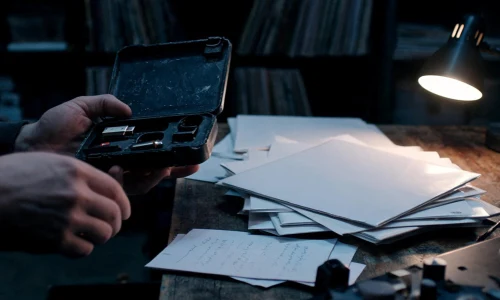

The quiet power of mid-set drum and bass
Why the middle of a drum and bass set matters, where groove, control, and system pressure shape how a night really unfolds.
Everyone remembers the drop.
The big moment. Lights up, phones out, reload called before the second bar has even landed. It is easy to think that is where a set is won or lost. Easy, but not quite right.
The truth sits somewhere in the middle.
That stretch of a set where the room is already moving, but nothing has peaked yet. No obvious highlight, no track that takes over the whole space. Just a run of tunes doing their job properly, holding the floor without forcing it.
It is less visible. But it is where most sets either settle in or start to drift.
Holding the room without grabbing it
The early part of a set gives you room to build. The late part gives you licence to go bigger. The middle is different. By then, the crowd has decided whether they are in or not. They are locked into the tempo, locked into the groove, and expecting it to continue without interruption.
This is where control matters more than impact.
Tunes that overreach tend to stand out for the wrong reasons. Too much top-end, and it starts to grate. Too much low-end, and the mix loses definition. Overcomplicated arrangements can pull attention away from the flow rather than adding to it.
The tracks that work here tend to be simpler on paper. Tight drums. A bassline that rolls rather than hits. Enough variation to keep things moving, but not so much that it breaks the rhythm of the set.
It is not about being safe. It is about being precise.
What DJs actually look for
Talk to DJs after a set, and they rarely mention the biggest tune they played. More often, they talk about the ones that held things together.
The track that mixed out cleanly three times in a row. The one that sat underneath another tune without clashing. The one that bought them a minute to reset without losing the room.
Those are the tracks that get rewound in private, not in the booth.
From a production point of view, they are harder to get right. There is nowhere to hide. No massive hook, no standout vocal. Just groove, balance, and how it behaves when it is layered with something else.
You notice it most when it goes wrong. When two tunes should work together but do not. Clashing basslines, drums fighting for the same space, transitions that feel forced rather than natural.
When it goes right, you barely notice at all.
System pressure and restraint
There is a particular kind of weight that only shows up on a proper system.
Not just volume, but pressure. The kind that sits in your chest rather than your ears. It changes how tracks are perceived. What sounded flat at home suddenly has depth. What felt busy becomes overwhelming.
This is where restraint starts to make sense.
Leaving space in the arrangement allows the system to do more of the work. The bassline has room to expand. The drums have room to cut through. Everything feels bigger, even though there is technically less going on.
It is a lesson most producers learn the hard way. More layers do not mean more impact. In a club, they often mean the opposite.
The mid-set is where that difference becomes obvious.
The role of movement
Energy in a set is not just about peaks. It is about movement.
Small shifts in tone. A slightly different drum pattern. A bassline that rolls a bit deeper than the last one. These changes are subtle, but they keep the room engaged without demanding attention.
It is closer to pacing than it is to performance.
DJs who understand this tend to avoid stacking too many similar tracks together. Not because the tunes are bad, but because the set needs variation, even if it is slight.
This is where certain styles naturally fit. Rollers, minimal tech, deeper jump-up. Not headline-grabbing, but essential in keeping the floor moving.
It is also where newer producers can find space. You do not need a huge hook to get played. You need something that works between other records.
Why it matters more than the drop
A single big moment can lift a set. It can not carry one.
Without a solid middle, those moments feel disconnected. Like highlights from different nights stitched together without context. The room might react, but it will not stay with you.
The sets that do stay with people tend to feel continuous. Not in a technical sense, but in how they move. No obvious gaps. No forced transitions. Just a steady build that makes sense when you look back on it.
That does not happen by accident.
It comes from understanding how tracks behave beyond their own drop. How they sit next to each other. How they leave space for what comes next.
And most of that work happens in the middle.
Where producers fit into this
For producers, this part of the set is easy to overlook.
It is more satisfying to write something that stands out immediately. A big intro, a sharp hook, something that grabs attention. There is nothing wrong with that, but it is only part of the picture.
The tracks that stay in circulation tend to be the ones DJs trust.
Clean mixdowns. Predictable, in a good way, phrasing. Low-end that does not jump unpredictably. Enough character to be recognised, but not so much that it becomes difficult to place.
It is a different kind of skill.
Less about making a statement, more about understanding function. Not in a cold or mechanical sense, but in how music actually gets used in a room.
And once you start listening for it, you hear it everywhere.
Not in the big moments. In the stretches between them.