Why Drum & Bass Crowds Stand Further Back Now
Modern drum and bass crowds look different to a decade ago. From phones and LED walls to sound positioning and crowd psychology, the dancefloor has shifted.
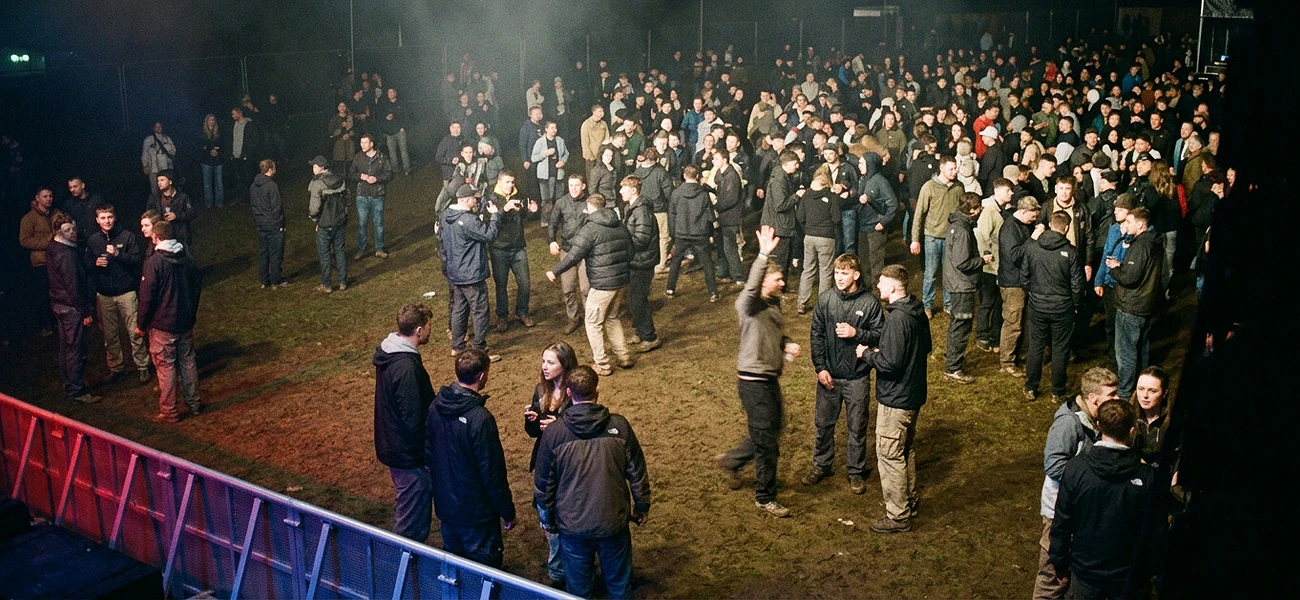
You notice it most at outdoor shows first. Not during the intro, and not when the MC is warming the room up. It happens just before the drop everyone already knows is coming. The crowd compresses slightly, phones rise in pockets across the middle of the dancefloor, and the actual pressure point of the rave settles somewhere ten or fifteen metres back from the barrier.
That was not always where the energy lived.
For years, the front row in drum and bass carried a particular kind of social weight. The rail was where the rewinds started. It was where people pushed forward for dubplates, where sweat built up on low ceilings, where the physicality of the music mattered almost as much as the tune itself. Smaller clubs intensified that feeling. A room with a bad air-conditioning system and a dangerous amount of sub pressure naturally pulled people toward the stack.
Modern drum and bass crowds often behave differently. Not worse, not softer, not less engaged. Just differently.
At large festivals, the most active section of the crowd now frequently sits behind the front third entirely. Watch the movement patterns at major events and it becomes obvious. The rail is often occupied by phones, flags, influencers, early arrivers, or people staying fixed in place for headline acts. The real dancing happens further back, where there is room to move, enough distance to absorb the full visual production, and often a better-balanced version of the sound itself.
The New Sweet Spot
Modern sound systems changed some of this physically. Large-scale festival rigs distribute low-end differently to traditional club stacks. In many outdoor spaces, especially wide-format events, the cleanest balance of sub and top-end does not sit directly at the front. It lands further back, where the system has space to develop properly.
People know this now, even if they do not consciously think about it. You can see crowds self-organising around those pressure pockets. Groups drift toward the places where kicks feel fuller, vocals separate properly, and the music stops sounding like pure impact and starts sounding musical again.
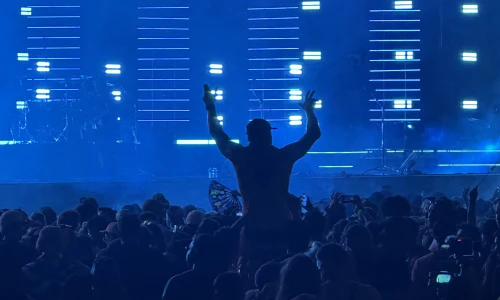
Visual production changed things too. Drum and bass is no longer a culture that hides comfortably in darkness. Huge LED walls, pyro, CO2 cannons, live visuals, and synchronised lighting rigs increasingly shape how people occupy space. The further back you stand, the more complete the show becomes.
That subtly alters behaviour. People stop treating the rave purely as a physical release near the speakers and begin experiencing it more like a large-scale audiovisual event.
You can see the difference clearly when older club tracks get played at modern festivals. Tunes built for sweatbox tension and low-ceiling pressure sometimes behave strangely in open-air spaces. Their energy can feel locally explosive but visually small. Meanwhile, tracks with long breakdowns, huge vocal hooks, or dramatic lighting cues suddenly feel enormous because the crowd experiences them collectively rather than physically.
The Phone Changes Space
Phones altered dancefloor geography in quieter ways too.
A person filming stands differently to a person dancing. They hold space differently. They stay more static. Large groups now leave subtle filming gaps around themselves, especially during headline sets or recognisable drops. Once enough people begin recording at the same moment, the density of the crowd changes almost automatically.
This is partly why modern dancefloors can look simultaneously packed and strangely spacious at the same time.
There is also less movement through crowds than there used to be. Older rave environments often involved constant circulation, people pushing toward reloads, squeezing toward the front after hearing a dubplate reaction, or physically chasing the energy around the room. Contemporary crowds are more likely to establish zones early and remain there for longer stretches.
Age plays a role as well. Drum and bass crowds are broader than they were fifteen years ago. The average audience at many larger events is no longer made up entirely of hyperactive teenagers surviving on adrenaline and warm lager. People want room. They want clean sightlines. They want access to bars, toilets, exits, and their mates without fighting through shoulder-to-shoulder compression for six straight hours.
That does not mean the atmosphere is weaker. In many cases, it means the opposite.
Some of the loudest reactions in modern drum and bass happen well away from the front barrier entirely. You hear it when a huge vocal lands and entire middle sections erupt at once, drinks flying upward rather than bodies forward. The release becomes horizontal instead of vertical. Less crush, more collective lift.
From Pressure to Perspective
There is probably a psychological shift happening too. Earlier eras of drum and bass often rewarded exclusivity, intensity, and proximity. Being closest to the booth mattered. Hearing unreleased music first mattered. Surviving the physical environment mattered.
Modern festival culture rewards perspective slightly more. People want the full picture now. They want the lasers framed correctly. They want the drop with the fireworks. They want the clip that captures the entire crowd singing the vocal back.
Even rewinds behave differently because of this. In smaller clubs, rewinds used to feel explosive because tension travelled physically through tightly packed rooms. At huge festivals, rewinds increasingly operate as theatre. Crowds anticipate them collectively, phones already raised before the drop fully lands.
That does not make the experience fake. It simply makes it different.
And despite all the discourse around phones, social media, and commercialisation, modern drum and bass crowds are still deeply responsive to pressure when the environment allows for it. Put the right DJ in the right room with the right soundsystem and people still surge instinctively toward the source of the bass. Small dark clubs still compress bodies toward the front naturally. Reload culture still exists. Sweat still drips from ceilings in the right spaces.
But the geography of the rave has changed.
The energy no longer lives exclusively at the barrier. Sometimes the real centre of the dancefloor sits further back now, right where the subs settle properly, the lights finally make sense, and thousands of people can experience the same moment all at once.