Interview: In conversation with Fr4ktion: Emotion, Jungle and Rave Memory
Featuring Fr4ktion
Fr4ktion discusses melody, rave-era influences, genre freedom, production habits, and finding emotional balance in modern drum and bass.
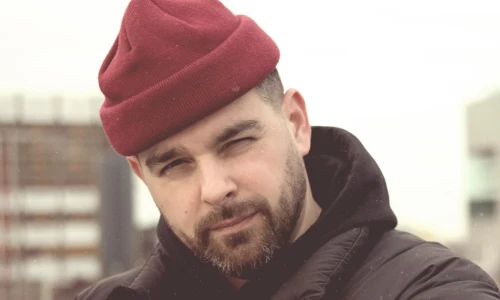
Fr4ktion has quietly built a catalogue that moves comfortably between dancefloor energy, liquid atmosphere and rougher jungle pressure without ever sounding disconnected from itself. His latest material for Embassy 9 Recordings continues that balance, pulling together melodic detail, weighty low-end and influences that stretch well beyond drum and bass alone. We sat down with Marc to talk about early rave culture, production instincts, emotional songwriting and why he has no interest in staying inside one stylistic lane.
The new release balances energy with a more emotive edge quite naturally. Was that contrast something you were consciously aiming for when writing it, or did the track arrive there on its own over time?
Fr4ktion: I think it’s something that’s always present in my music, or at least I try to make it present! I grew up in the early rave days, so my influences have always been the emotive side of trance music or early liquid DnB, as well as the harder side. Maybe it’s subconsciously channelling 30+ years of electronic music.
Embassy 9 seems interested in artists who are comfortable moving across different shades of drum and bass rather than sitting in one lane. What made the label feel like the right fit for this release?
Fr4ktion: I love Drum & Bass and all its subgenres, and I personally try to make all flavours of it. I have Liquid releases, a range of upcoming Jungle tracks, and even my first label release with Dirtbox Recordings was a jump up track. Jason at Embassy really gives me that creative freedom, mixed with knowing what makes a good track. It was an easy choice for me.
There’s a strong melodic thread running through your music even when the drums and basslines hit hard. How much of that comes from your background outside drum and bass?
Fr4ktion: I think a lot of it comes from my influences from old, and I did learn classical piano as a kid. At the same time, you’d be surprised at what’s on my car playlist! I was a big fan of the harder side of DnB, like Technical Itch and Dom & Roland, but I’ve always been a fan of music in general. I’m a sucker for a good female singer and any decent music from any genre.
You mention roots in hip hop alongside deeper house and trance influences. Are there particular records or artists outside DnB that still shape how you think about groove and emotion in a track now?
Fr4ktion: Well, the first album I ever bought, at the age of 12, was Public Enemy’s It Takes a Nation of Millions to Hold Us Back. The 2nd album was Bon Jovi’s Slippery When Wet! DJ Shadow, The Pharcyde, MF Doom, and J Dilla, all had a big influence on me. Deadmau5 and Kaskade - Escape gives me goosebumps. Nowadays, I think Billie Eilish and Finneas do a great job as well. I mean, Chihiro, Birds of a Feather and Wildflower, one after another on the same album, Hit Me Hard and Soft? How can you not admire the talent and emotion in their music?
A lot of producers eventually settle into one identifiable sound, whereas your catalogue feels more open-ended stylistically. Do you approach each track with a blank slate, or are there certain production habits that always pull things back towards your identity?
Fr4ktion: I’m very much dictated by my mood. If I’m happy, I tend to lean towards Dancefloor, if I’m down, then it’s more liquid, and if I'm angry, then I go to Jungle/breaks. When I get in the zone, I’ll end up making 8 Dancefloor tracks in a row, then I’ll switch to another genre, make something I’m proud of and then try and do it again – 10 times, and so on. I know many artists say they don’t want to pigeon-hole themselves, but to really make it in DnB, you have to find your niche. I don’t care about that. I love the whole scene and will always make whatever I feel, as I simply enjoy the process.
Thinking back to the early UK rave era that first pulled you into the culture, what parts of that atmosphere do you feel are missing from modern dance music, and what parts do you think the current scene actually does better?
Fr4ktion: Definitely the unity of people back then. It really didn’t matter who you were, the colour of your skin, social status, any preference at all, it was all about the music and the community. Whilst I feel in current times a lot of that has been lost, as it seems it’s very much about the ‘self’ - I don’t blame the kids for that at all though - I also think the music has grown to be so much better. Every now and again, you hear people moaning about DnB losing its soul and how it’s all commercial. I disagree; these people just aren’t listening. If you look at every week’s releases across the board, there’s a massively diverse sound. It’s never been as big or as accessible.
When you’re building a tune from scratch, what tends to become the anchor point first: drums, bass movement, atmosphere, vocal ideas, or something else entirely?
Fr4ktion: Most of the time, I’ll start with a 16-bar drum loop. I learnt this early not to get too bogged down in a short loop, so 16 bars are good for me. I’ll go straight to the bassline, then build from there. That’ll show me the direction the track needs to go. It’s not set in stone, I might get inspired by a vocal or a melodic loop and build on that, but my DAW opens with a beat structure already in place, so I can jump straight in.
There’s so much pressure now for producers to constantly release music and stay visible online. How do you personally balance output with actually giving tracks enough space to develop properly?
Fr4ktion: That’s a good question. When I first started, I forced myself to finish every track, so I built up quite a large catalogue. Most of these tracks were complete rubbish, but I released them anyway. Each track was purely about me learning something different, whether it was structure, sidechaining, automation, etc., etc. In fact, the first couple of tracks I released, I didn’t even know what mastering was! Let alone integrated LUFS. I work quickly and sometimes make a 3/4 track EP in a weekend, but I’ve learned to let tracks sit for a while. I’ll listen to them repeatedly in the car, and that way I’ll find things to fix and/or change.
What’s your relationship with the dancefloor when writing? Are you imagining specific rooms and systems while producing, or are you more focused on creating something that works emotionally outside the club as well?
Fr4ktion: I'm trying to do both. Whilst it’s amazing to hear your track played out in a club, I’m also aware that many people simply like to listen at home. I aim to write music purely for me, and then if I’m happy, hopefully others will like it too. I’m not hell-bent on writing for the club.
Away from music for a minute, what does a completely switched-off day look like for you when you’re not thinking about production, releases, or the scene?
Fr4ktion: You’re telling me there are other things to do than always thinking about production and listening to DnB? In those small times away, I love film, sim racing, and I also like a round of golf.
You’re stranded on a desert island with one turntable, a generator and one record. What’s it going to be?
Fr4ktion: That’s a tough one. Probably The Pharcyde - Bizarre Ride II The Pharcyde.
Across the conversation, Fr4ktion keeps returning to the same idea: following instinct rather than expectation. Whether that leads towards liquid, jungle, dancefloor or something in between seems less important than making music that feels emotionally honest in the moment. That openness runs throughout both his catalogue and this latest release for Embassy 9 Recordings, giving the music a sense of movement that never feels boxed into one particular corner of drum and bass.