Interview: In conversation with Komatose & Captain Apathy: CK Records launch
Featuring DJ Komatose & Captain Apathy
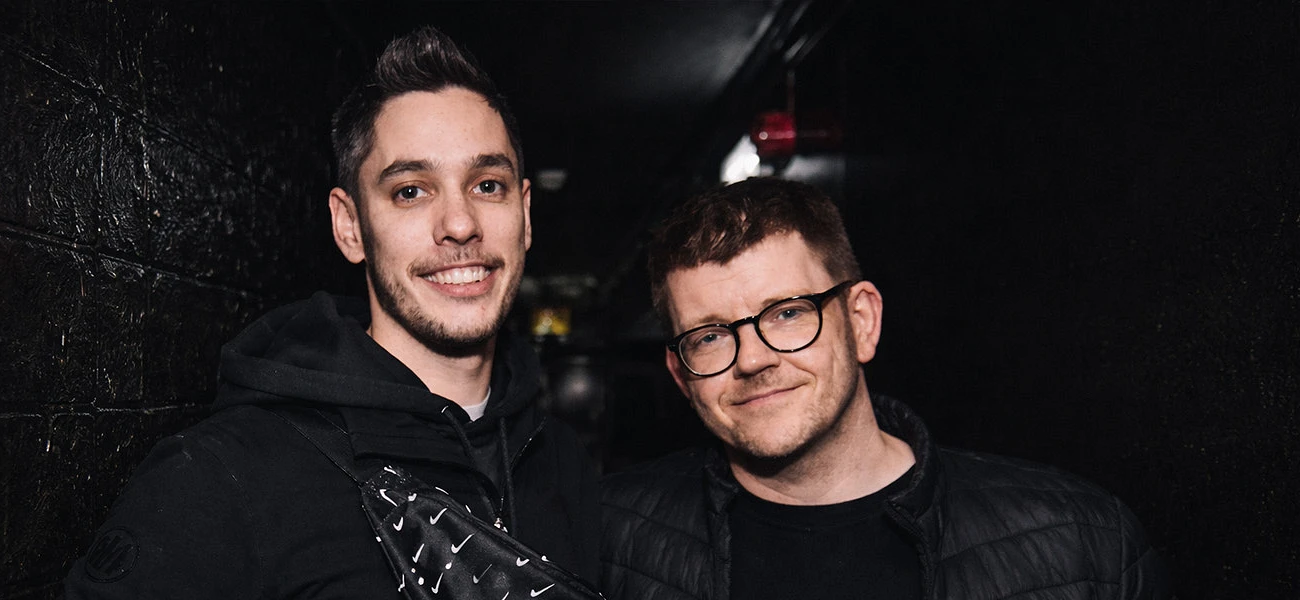
Komatose and Captain discuss launching CK Records with Body Rocker and Goes Like This, their studio dynamic, and shaping their own drum and bass future.
There is something quietly satisfying about putting your first collaborative release out on your own label. For DJ Komatose and Captain Apathy, the launch of CK Records begins with two club-focused cuts built for impact rather than ornament. We caught up with the pair to talk about Body Rocker, studio instinct, and the realities of running your own imprint from the ground up.
This being your first joint release on CK Records, did it feel any different sitting down to write knowing there were no outside expectations, just the two of you and the studio?
Not really. We’ve been working together in the studio for a few years, even if that means just sending tracks back and forth for feedback. This one just feels more special because the two tunes are coming out on OUR label. So we’re managing everything from the promotion to distribution.
Body Rocker has that immediate, physical impact; it feels like a tune written for big systems rather than overthinking. Do you remember the moment it properly locked in?
I think it was the moment that angry bass was added to the tune. It just brought the 808 rolling bass to life. After that it was just variation and polishing touches to the tune to get it sounding as good as possible.
Goes Like This heads in a more stripped-back direction, but it still carries a lot of weight. When you’re working together, how do you decide which ideas to push hard and which to leave sparse?
It depends on the direction we feel like we’re headed when we get there really. Unless we go into a session with an idea already (which rarely happens). It’s more of a case of where we start from. The drums will usually dictate the direction of the tune, in this case it was more of a stripped back minimal feel. It also tends to be the typical style of Koma’s general production, so his influence weighs heavy on this one.
You’ve both mentioned how quickly these came together. Do fast sessions bring out something different in your collaboration compared to longer, more considered writing periods?
Catching a vibe is critical for these fast sessions. They are a sign of how quickly we can hear which parts of the tune need to be added to make it come together. For us, a slow session is where we’re labouring for ideas or using trial and error to test new additions, as well as instances like mixdown sessions, which tend to take a while.
There’s a clear contrast between the two tracks without it feeling disjointed. Is that something you’re consciously balancing, or does it naturally reflect how your tastes overlap and diverge?
We think that generally just comes down to production style. We have a similar yet not identical taste in Drum n Bass and music in general, so this crossover of styles is also beneficial to our joint productions.
Running your own label gives you freedom, but also responsibility. How has launching CK Records changed the way you approach finishing and releasing music, if at all?
Only in that we’re both less open to letting other labels have our music now. So we’re building up a back library of tunes for release in the future, amongst releases from other artists.
When you’re in the studio together, how do roles tend to fall? Is it instinctive, or do you find yourselves swapping hats depending on the track?
Koma tends to be in the driving seat, mainly coz of his rapid workflow ability. But ideas are always bouncing off of each other, and if Captain has an idea he can’t translate into words, then of course he’ll take the seat. Sometimes, one of us will bring a starter project or something they’ve worked on alone as a base idea, and we’ll enhance that. Other times, we start from scratch.
Both tunes feel rooted in club energy rather than trends. How important is that dancefloor feedback loop for you at this stage, compared to studio satisfaction?
There’s nothing better than watching people dance to your music, better yet. Calling for a reload. Studio satisfaction is important, but you want it to sound nice on a phone, in a car, or out of a laptop.
You’ve got more music lined up, but does this one feel like a marker for where CK Records is heading, or just the natural result of where you’re both at right now?
Again, only because it’s the first release on our label. We’re excited about the future because we’ve got some cool projects coming up; A new release from returning artist: Schema. A solo project from Komatose and a release from a new artist yet to be announced on the label. So yeah. Good things ahead.
Looking ahead, are you keen to keep exploring this duo dynamic, or is the plan to let CK Records become a wider outlet for different ideas as well?
We’ll have releases from us as a duo in the future, but our intention for the direction of the label is to have a close-knit family of artists that will regularly release on the label as we become well-established. We’re open to all ideas. At the moment, we’re sticking to Drum n Bass because it’s what we know. But if the right tune comes along at the right time, there’s no reason why we can’t diversify our catalogue.
You’re stranded on a desert island with one turntable, a generator and one record. What’s it going to be?
Koma - Can’t do it. Can’t choose one. Sorry, not sorry.
Captain - Dillinja - Get Dirty
As an early move for CK Records, Body Rocker makes its purpose clear: direct drums, physical low end, no wasted space. With more releases lined up and a growing back catalogue in development, the label looks set to build steadily rather than loudly, anchored in the kind of drum and bass that lives and breathes on a proper system.