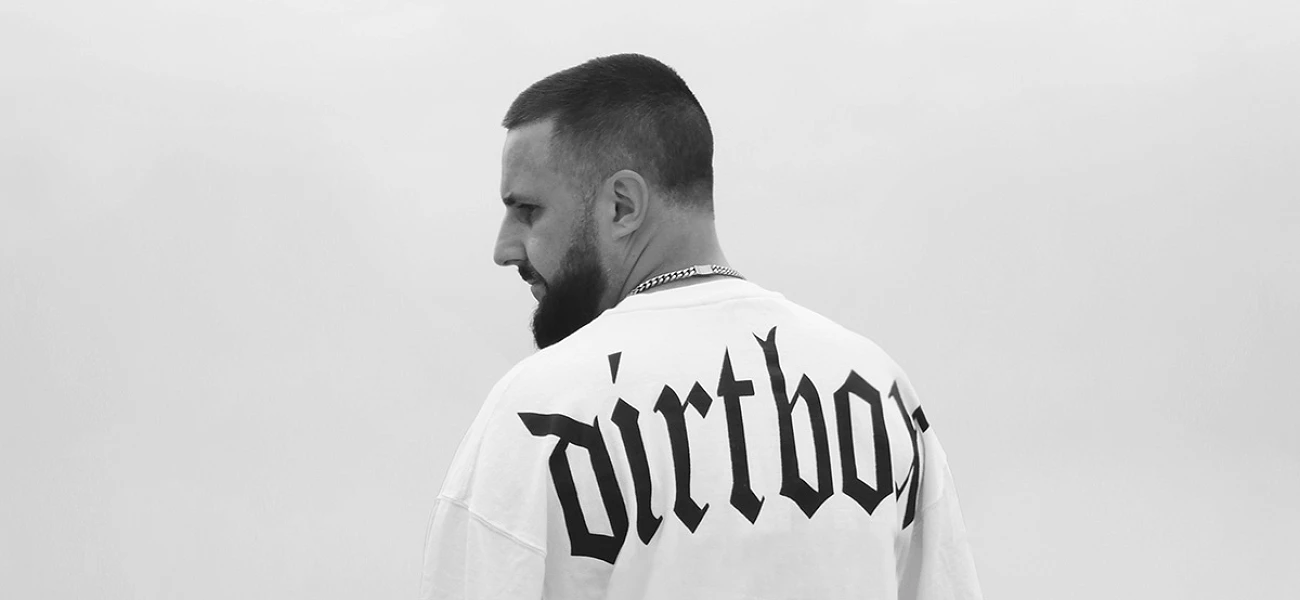
Interview: In conversation with LeeUHF: The vision behind DNB Essentials
Featuring Lee UHF
LeeUHF reveals the inspiration and detailed curation behind DNB Essentials Vol. 1 on Dirtbox Recordings, exploring legacy, physical formats, and artist collaboration.
Lee UHF has carved a unique space in the UK drum and bass community through his relentless work with Dirtbox Recordings. Now, he’s launching DNB Essentials Vol. 1, a compilation that revives the lost art of curation while spotlighting fresh and established talent from across the globe. We caught up with him to talk about the inspiration behind the project, his love of physical formats, and what DNB Essentials means for the next generation of producers.
Idea for DNB Essentials feels both simple and powerful, bringing back a culture of curated discovery. When did the seed for this project first start forming in your mind?
I can’t pinpoint an exact moment, but I knew the Tape Pack project was wrapping up and I wanted a fresh concept to really dive into. Over the summer last year, I found myself revisiting Andy C’s Nightlife albums. Both the music and the artwork absolutely gave me inspiration. Focused curated projects seem to be a thing of the past now. But they always got me mega excited when I knew a new Nightlife album was on its way, and at the same time, I had a handful of singles from new artists I wanted to bring onto the label. I felt they needed a proper introduction rather than just being dropped straight onto an EP. From there, the idea naturally grew. It became about telling the story of these artists and giving them a platform to present their music in a way that really connected them with our audience and the label as a whole.
How much of the concept came from your own experiences as a fan of the old Nightlife series and physical compilation culture?
I’d say it’s 100% inspired by my own experiences. I’m a drum and bass fan first and foremost, before the business side, because you really have to love the music to take the ups and downs of this industry on and carry on. I’ve always tried to move with the times, but I also deeply understand how crucial culture is to drum and bass and its fans. Nostalgia resonates strongly, whether it’s movies, music, or fashion, and I wanted to capture that same connection for new artists and music without compromising integrity or quality. Compilations are everywhere, and while they offer great value, they’re often forgettable. Too often, they feel like a collection of leftover tracks or artists the compiler isn’t fully invested in. By curating a compilation thoughtfully and putting my name to it, I’m signalling a real commitment to quality, every track is chosen with care. For me, it’s all about creating something that truly matters to the listener and stands out, rather than just filling a slot.
This first volume sees you take the curatorial role. What guided your track selections, and how did you decide which artists to bring into the fold?
I spent a lot of time debating whether to take this on because I didn’t want it to come across as a vanity project. I am really self-aware of that, especially slapping my face on a project. Putting your name over someone else’s music can feel a bit self-serving, but after speaking to the artists and explaining the vision, it was unanimous from everyone that this went ahead in this way, so it was really important to us that the spirit of Andy C’s Nightlife remained intact. By presenting this as specifically curated by me, it signals that this isn’t just a collection of throwaway tracks, there’s a face and a name putting their stamp on it. There is a long awaited collaboration by Noise Souls and myself also on the release which does help as well. It humanises the release also, showing that the curator is genuinely passionate about the artists, their music, and their vision. This isn’t a casual compilation, that’s why we’re building it as a brand in its own right, with plans to bring in other curators for future volumes who have already agreed to take part. For the track selection, I started with my most trusted artists on the label and also reached out to some incredible demo submissions we’d received. It was amazing to see how enthusiastic everyone was about being part of this. There was no pushback, and people trusted that this wasn’t just a random compilation. We also pushed back on a lot of tracks that weren’t quite ready; every track needed to feel strong enough to stand as a single on its own. The result is our most musically and culturally diverse drum and bass release to date, covering multiple sub-genres and featuring artists from the UK, USA, Sweden, Russia, Puerto Rico, and beyond.
Around 20 new producers are joining Dirtbox through this project. How did you approach onboarding fresh talent for something this ambitious?
For both established artists and emerging talent, I made sure everyone fully understood the vision behind this project in advance. How it stands apart from typical multi-track VAs. I emphasised the benefits of being part of this project, and above all, made it clear that this wasn’t just another compilation where tracks get lost in a sea of music. That’s one of the reasons we kept the tracklist intentionally small: to give each artist’s work the space and focus it deserves.
Each edition will have its own curator in future. What do you want those selectors to bring to the table when they take the reins?
We already have two curators confirmed and a few more I’m hoping to bring on board. Ideally, we’ll also encourage some established names in the future to help give exposure to new artists. For the selectors, diversity is key. I’m not looking for someone who only focuses on one sub-genre of drum and bass, we want them to explore the full spectrum. They don’t necessarily need to be known for that range, but they should be open to it. Imagine someone like London Elektricity curating a release that also includes Neurofunk tracks or Audio curating some Jungle rollers. Now that would be really interesting.
There’s a clear emphasis on physical formats such as vinyl and CD at a time when most labels focus entirely on digital. Why was that important to you?
The original Nightlife releases were on CD, and they were huge, every one of them is still in my collection. For me, the ultimate physical format is vinyl. Drum and bass has always been rooted in DJ culture, and vinyl is where it all begins. Nowadays, barely 1% of producers get the chance to release music physically, especially newer artists who started during/after COVID. Being able to offer that as part of this project felt important, it’s a way to honour the culture and give these artists something tangible that really matters.
Dirtbox has always been known for its community ethos. How does DNB Essentials continue that culture of artist development and collaboration you’ve built over the years?
One thing I’ve always focused on with Dirtbox is supporting the artists as much as possible and involving them closely in the releases. I’ve heard countless stories of producers signing tracks to labels and then never hearing anything again, only to notice the release later, or seeing it launched with zero promotion. That lack of engagement is unimaginable to me. I keep the artists in the loop on everything, right from the very beginning, including how long each stage will take, the promotional schedule, artwork, mastering, and pitches to DSPs. They have input on every aspect, and I love it when someone gets really invested and shares their own ideas. Every release is a true collaboration. I had some real fun doing Beskar releases. He’s very creative, and we have both put together some really awesome material for the promo of his Dirtbox releases. Diode is another I love working with, He's got his content game on lock, Has his own Youtube show which we co-produce with him on our Dirtbox Youtube channel. Above all else, though, I like to make sure every artist is informed and supported throughout the process, whether that’s helping with their profiles, back-end setup, or ensuring their Beatport and Spotify pages are in order. Even small steps like these benefit both the release and the artist. It’s a win-win, and it’s why I refuse to be part of the trend of labels just throwing out as much music as possible with no promotion or quality control. People won’t take you seriously if that’s your approach. I’ve been humbled by the positive feedback I’ve received about my work ethic and approach, it really means a lot. For me, integrity and the music always come first; everything else is secondary.
From a label management perspective, how challenging is it to plan something this structured while still leaving space for creativity and evolution?
You can’t rush a project like this if you want it to look and feel right. The whole process took around five months, and making sure no one was rushed was key, especially as the project evolved with new ideas and artists joining along the way. Artwork and mastering had to be fully aligned, which required careful coordination. The level of commitment really shows in a compilation when every element, like artwork, mastering, and overall presentation, meets the same high standard. Synchronising all the artists, getting their photos and pre-masters to the right level, was a challenge in itself because everyone works at different speeds due to life commitments. Avoiding unrealistic deadlines was crucial to making it work. I also held off on setting an official release date until the project was close to completion. On my labels, I often let projects take the time they need, you can’t force creativity into a rigid timeline. Once the end was in sight, I was able to set a release date that was at the point of being 99% complete to ensure promotion and the finished product got its just-deserved attention.
Looking ahead, how do you see DNB Essentials evolving across the next few instalments, and what kind of legacy do you hope it will build?
As I mentioned, we drew a lot of inspiration from Andy C’s Nightlife, but I don’t see this as a direct comparison. Andy and those albums are a juggernaut and a true staple in the history of music. The legacy I hope to build with DNB Essentials is to help break artists out. A little like what Close 2 Death has done for Neurofunk. Giving them tools and support to progress in their music, and carving out Dirtbox’s own corner of the drum and bass landscape as a platform that genuinely does right by producers. We already have two future curators confirmed, and while I’m not sure yet how frequently future editions will run, once those first two are underway, I plan to start bringing in some more established names to take part in the curation.
You’re stranded on a desert island with one turntable, a generator and one record. What’s it going to be?
DNB Essentials Vol. 1 of course… The vinyl version ;)

DNB Essentials Vol. 1 is out now on Dirtbox Recordings. A carefully curated and community-driven release, it captures LeeUHF’s enduring ethos: passion, integrity, and dedication to the artists who shape the sound of drum and bass.