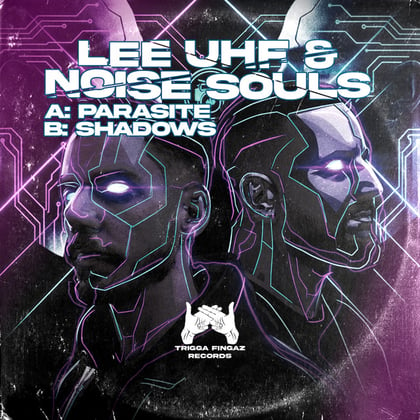
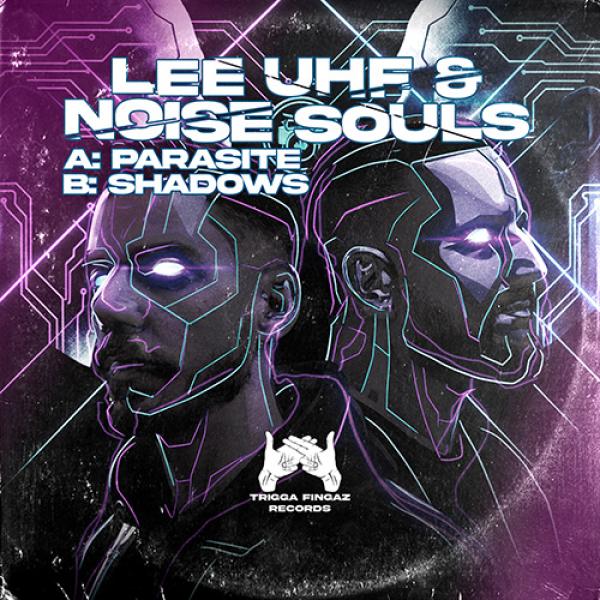
Lee UHF and Noise Souls have been on a steady run of collaborations, and Parasite / Shadows keeps that momentum moving while sharpening the details.
Out on Trigga Fingaz Records, the release lands on 17 April and leans into a darker, more textured space. It is not about big openings or obvious hooks. More about atmosphere, movement, and how the low-end sits in the mix.
Parasite does not hang around in the intro. It gets to the point fairly quickly, but what stands out is the detail in the top end. There is a run of metallic, almost industrial textures that carry through the arrangement, with reverb giving them space to breathe. At times it feels like the rhythm is being shaped by those hits, like a blacksmith’s hammer cutting through the mix.
When the drop lands, the drums are tight and controlled. The bassline stays tucked in rather than jumping forward, which keeps everything balanced. It is not trying to overwhelm the system. Instead, it builds pressure gradually, making it a useful tool in a mix when you want to shift the tone without blowing things open too early.
Shadows stretches things out a little more on the intro, though it still keeps things focused. There is a reversed breath effect running through it that adds a sense of depth straight away, tying neatly into the title without feeling forced.
The low-end is the main draw here. A big, extended bassline that almost leans into a foghorn feel, sitting somewhere between synth and distortion. It rolls rather than punches, and there are moments where it starts to break up slightly, adding texture without losing control. That rough edge works in its favour, especially on a louder system.
Structurally, it gives DJs a lot to play with. The longer intro and smoother movement make it easy to layer, and it holds momentum well once it is in the mix.
Together, the two tracks show a clear understanding between Lee UHF and Noise Souls. The ideas are simple, but the execution is tight. Clean drums, considered low-end, and just enough variation to keep things moving.
It lands as a confident step in their run of collaborations. Nothing overplayed, nothing wasted, just two tracks that know exactly where they sit and how they work in a set. That clarity goes a long way.
View Lee UHF ProfileLooking for more reviews? Check out our latest DnB reviews.