Why Some Rollers Feel Flat Online But Massive In A Club
Why certain drum and bass rollers only fully come alive on real sound systems, and what that says about modern listening culture.
Half the room ignored it at first.
The blend came in quietly, tucked underneath the outgoing tune without any dramatic switch or big mid-range announcement. A few people were still ordering drinks. Somebody near the front looked down at their phone. On a livestream rip later that week, the same tune would sound almost oddly empty.
Inside the room, though, the sub had started spreading properly.
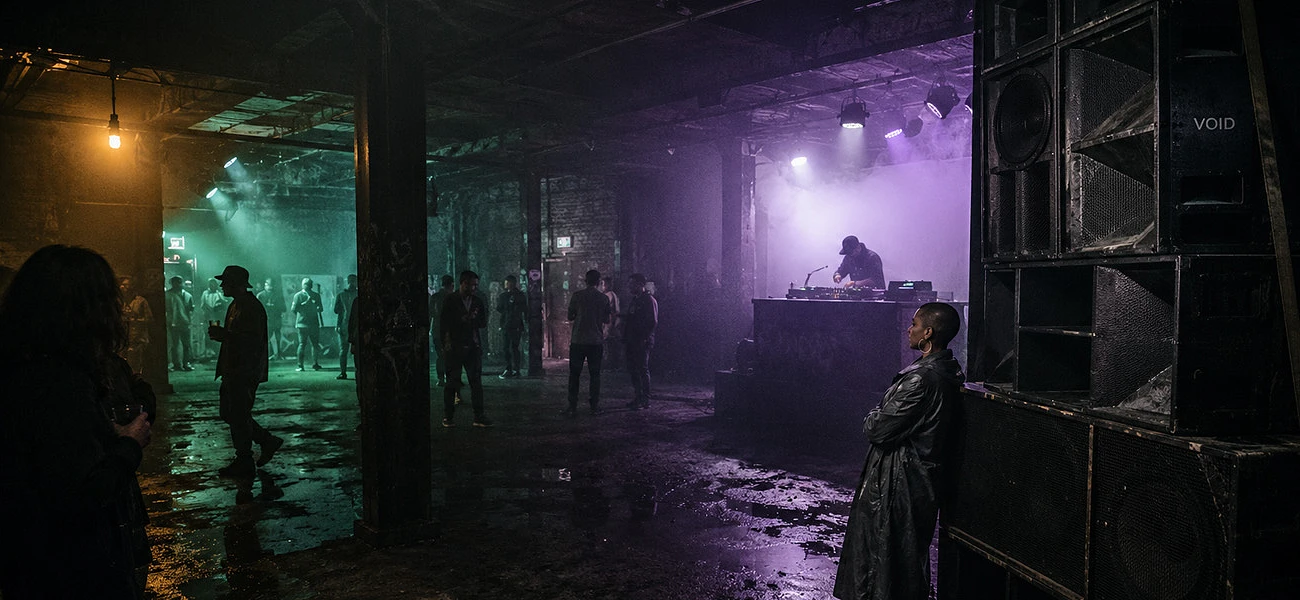
You could feel the track settling into the floor before most of the details even became audible. The bassline wasn’t aggressive, just wide and physical, sitting underneath the drums with enough space around it for the entire system to breathe. By the second drop, the dancefloor had tightened almost accidentally. Less shouting, fewer reactions, more people locked into the groove without really looking around for confirmation.
Some rollers work exactly like that. Online, they barely seem to move. In a club, they suddenly make complete sense.
The Tunes That Need Air Around Them
A lot of modern drum and bass translates immediately through small speakers. Sharp upper mids, clipped vocals, exaggerated switch moments, dense drops designed to register quickly on social clips or compressed previews. You understand the tune within seconds because almost all the important information sits high enough in the frequency range to survive phone playback.
Rollers often behave differently. The impact arrives through repetition, weight distribution, low-end movement, and tiny rhythmic shifts that only properly reveal themselves when there’s enough physical space for the frequencies to develop naturally.
That distinction matters more than ever because so much listening now happens outside clubs. Tunes get discovered through Instagram clips, ripped festival videos, TikTok edits, Bluetooth speakers, train journeys, and half-muted headphones during work. Entire conversations form around records that most people still haven’t actually felt on a proper system.
Sometimes the translation holds up perfectly. Sometimes it absolutely doesn’t.
You hear it constantly with stripped-back rollers. Online comments call them empty or unfinished, then the same tracks flatten a room two weeks later because the tune was written around pressure rather than obvious detail.
Why DJs Keep Returning To Certain Rollers
Talk to DJs who play long sets regularly and they’ll usually mention the same thing: certain records simply stay useful for longer.
Not necessarily because they’re bigger, but because they leave room for movement inside a mix. The sub remains stable through transitions. The drums don’t overcrowd everything around them. The groove keeps functioning at different points in the night without exhausting the room too quickly.
That’s partly why some rollers survive for years while more explosive tracks disappear after a few months of heavy circulation. One relies on surprise; the other relies on physical consistency.
You can hear producers reacting to this split in real time. Some tracks are becoming denser and more immediate, clearly built to create fast reactions online. Others are moving the opposite way entirely: cleaner arrangements, fewer dramatic fake drops, longer passages with minimal melodic information, more emphasis on low-end shape and pacing.
Those tunes often sound underwhelming until they hit a tuned room properly.
Then suddenly the gaps inside the arrangement become the entire point.
The Room Is Still Part Of The Music
Drum and bass has always depended on physical environments in a way streaming platforms still struggle to reproduce fully.
Low frequencies behave differently depending on room dimensions, speaker placement, crowd density, volume, and system tuning. Some basslines bloom slowly across a space rather than punching instantly through headphones. Certain kick and sub relationships almost disappear at low volume but become enormous once enough air starts moving through the room itself.
That doesn’t mean digital listening is somehow less valid. Most people discover music online now, including DJs. Smaller labels rely on clips and streaming to survive. New producers build audiences globally without ever pressing vinyl or cutting dubplates.
But drum and bass still carries traces of soundsystem culture at its core. The music was shaped around physical response long before algorithm-driven discovery became standard. You’re not only hearing the low-end, you’re reacting to pressure moving collectively through a room full of people at the same time.
That’s partly why certain rollers age so well. They aren’t demanding attention every few seconds. They trust the system to finish the sentence for them.
Club Weapons Versus Clip Weapons
There’s an increasingly visible divide now between tracks designed to dominate online and tracks designed to dominate rooms.
The first category usually announces itself immediately: oversized switch moments, aggressive mid-range textures, fake drops engineered for crowd clips, constant movement designed to hold attention on compressed playback.
The second category often sounds deceptively simple outside a club.
Those records survive differently. DJs keep them because they solve practical problems inside sets. They create tension without overcrowding the mix. They reset energy naturally. They hold dancers in motion without demanding a reaction every sixteen bars.
Most importantly, they still work six months later.
You only fully understand some rollers once the room starts carrying part of the tune for itself.