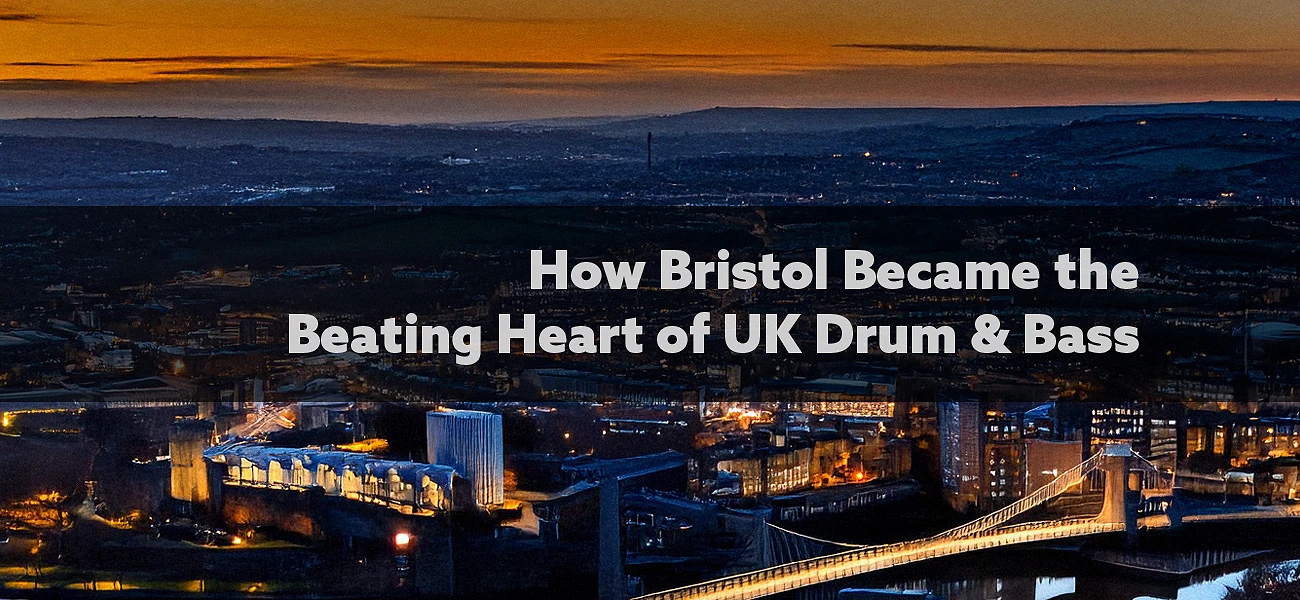
How Bristol Became the Beating Heart of UK Drum & Bass
Explore the rich history and ongoing influence of Bristol on the UK drum and bass scene. From Full Cycle to Critical Impact, discover why this city remains a powerhouse for DnB innovation.
From bass bins in Bedminster to pirate frequencies drifting across St Pauls, Bristol's connection to drum and bass isn't just strong. It's embedded in the city's cultural DNA. With a reputation for self-sufficiency and sonic experimentation, Bristol has long been a crucible for genre-defining movements. But what exactly makes it such a consistent powerhouse for UK drum and bass? And how did a relatively small city in the South West become one of the genre's most important hubs?
Early Roots: From Wild Bunch to Full Cycle
Before drum and bass was fully formed, Bristol was already pioneering bass-driven sound. The Wild Bunch, a sound system collective that eventually gave rise to Massive Attack, was active throughout the 1980s, blending reggae, hip hop, funk and early electronic music. Their influence helped spark a wider culture of dubwise, bass-heavy experimentation.
By the early 90s, jungle had taken hold, and Bristol became a key city in the movement. Roni Size, DJ Die, Krust and Suv formed Full Cycle Records, releasing dark, rolling, jazz-infused breakbeats that came to define an era. Their work with Reprazent and the Mercury Prize win for "New Forms" in 1997 put Bristol on the global map.
Independent Labels and the Bristol DIY Ethos
Full Cycle may have led the charge, but they were never alone. Bristol's scene has always favoured independence over industry, with artists setting up their own labels, studios and events to keep things moving on their own terms.
Notable examples include:
-
Dutty Audio (DJ Die): Gritty and raw, pushing boundaries across tech and jungle styles.
-
Utopia Music (Mako): Known for detailed, emotive rollers and cutting-edge engineering.
-
Symmetry Recordings (Break): Home to some of the most finely produced tracks in the game.
-
Intrigue Music (Ben Soundscape): Championing deeper and more musical sounds.
These outlets not only nurtured local artists but also attracted producers from around the UK and Europe. The Bristol sound became synonymous with craft and character.
Break told UKF in 2021:
Bristol has this ability to support its own scene without relying on London. It has always been self-sufficient.
Sound System Culture and Community Roots
Unlike other cities where club culture overtook outdoor and DIY spaces, Bristol kept both alive. Events like Teachings in Dub, St Pauls Carnival, and The Bristol Carnival Afterparty kept the lineage of reggae, dub and dancehall connected to contemporary drum and bass.
That deep-rooted love of sound system culture fed into the aesthetics of the music. From the weight of the sub to the importance of space in a mix, you can hear the influence in everything from early jungle to modern halftime.
Even today, venues like Cosies, Trinity Centre and The Black Swan host some of the most authentic underground DnB nights in the country.
The New Generation: From Break to Bou
Bristol's influence didn't fade with the turn of the millennium. If anything, it's become more diverse and exciting. Break continues to lead with impeccable minimal rollers, while producers like DLR and Hydro have kept the tech pressure strong.
Meanwhile, newer faces and crossovers are reshaping the landscape:
-
Bou (based in Bristol): High-energy and festival-friendly but with tight production.
-
Phaction: Melodic liquid with cinematic depth.
-
Charli Brix: One of the strongest vocalists in the genre, often working with Critical Music.
-
Anaïs and En:vy: Part of a new wave of producers blending soulful, gritty and experimental styles.
The Nights That Built the Scene
Anyone who has spent time in Bristol knows the nights here hit different. Long-standing events helped define the culture and give emerging artists a platform to test their sound.
Key nights include:
-
Intrigue at Basement 45: Deep, musical DnB with a devoted following.
-
RUN at Motion: High-profile line-ups and a massive crowd.
-
Ruffneck Ting: An early 90s staple that helped define the local jungle sound.
-
Thekla Fridays: Combining liquid, jump-up and classic anthems on a boat.
-
Bristol Mix Sessions: A livestream and events project showcasing local talent.
Each night carries its own identity, but all share a focus on quality sound and community connection.
Bristol’s Self-Sustaining Ecosystem
What sets Bristol apart is not just its talent, but its structure. From producer collectives to label-run events and cross-disciplinary collaborations with graffiti artists and visual designers, the city works as a creative ecosystem. It’s not just about individual names, it’s about mutual support and a shared belief in the music.
You can move to Bristol with a USB stick and a couple of tunes, and within six months be playing a support slot, getting feedback from veterans, and appearing on a live stream. It’s that open.
Looking Ahead
As of 2025, Bristol shows no signs of slowing. The scene is evolving with genres like 160, grime-influenced steppas, and even hardware-led modular breaks all finding space. Local radio like SWU.FM, and platforms like DnB Allstars and Keep Hush regularly spotlight Bristol artists, keeping the city front and centre.
The rise of hybrid events, daytime parties, and community-led workshops means the next generation is already being primed.
Final Thoughts
Bristol didn’t just help invent the sound of drum and bass - it invented a way of doing things that still shapes the culture. It remains fiercely independent, unshakably bass-driven, and proudly collaborative.
Whether it’s a deep liquid set at Cosies or a full-throttle rinse-out at Motion, Bristol continues to offer something no other city can quite replicate.
What’s your favourite Bristol DnB memory? Share your story with us and we might include it in a follow-up piece.