
The rise of design-led neurofunk in modern drum and bass
Design-led neurofunk is reshaping drum and bass, with space, tension and cinematic structure replacing density in a shift felt across labels and dancefloors.
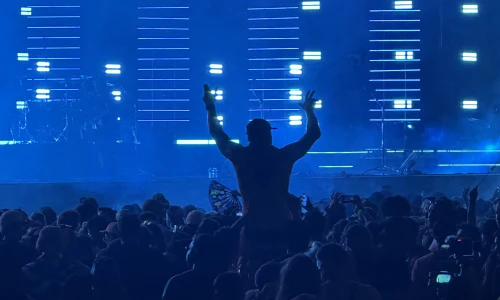
There is a moment in a set now, often early, sometimes midway through, where the energy drops but the room does not. The drums ease back, the low-end holds, and the track takes its time. No rush to the drop, no clutter in the mix, just space, pressure, and a crowd waiting. It is a subtle shift, but one that has been building across modern drum and bass, particularly within neurofunk.
For years, the direction felt clear. Faster transitions, denser arrangements, more movement packed into shorter spaces. Tracks were built to compete, to hit harder, to fill every gap. That approach still exists, and still works in the right hands, but it is no longer the only path. A quieter shift has taken hold, one that leans toward restraint rather than excess.
This is not a new sound in the strictest sense. The roots sit firmly in earlier eras, where tension and control carried equal weight to impact. What has changed is how deliberately those ideas are being applied again, not as nostalgia, but as a response to how the music is being played and consumed now.
Space as a tool, not a gap
At the centre of this shift is a renewed focus on space. Where previous waves of neurofunk often filled the spectrum, newer releases are leaving room. Intros stretch out, sometimes well beyond what would have been considered practical even a few years ago. Elements are introduced gradually, not layered all at once, allowing tension to build without forcing it.
This approach changes how tracks behave in a mix. DJs are holding blends longer, letting intros breathe, using silence and near-silence as part of the transition rather than something to avoid. The result is a different kind of movement on the floor, one that relies less on constant peaks and more on controlled progression.
Low-end design follows the same logic. Instead of stacking multiple bass layers, producers are focusing on weight and clarity. A single line, well placed, can carry more presence than a crowded arrangement. It also gives the drums space to sit properly, tightening the groove without increasing tempo or complexity.
Cinematic structure and long-form tension
There is also a noticeable shift toward cinematic thinking in arrangement. Tracks are being built more like sequences than loops, with defined sections that evolve rather than repeat. Intros feel closer to scoring than traditional DJ tools, drawing on atmosphere and tone before rhythm takes over.
This can be heard in releases across newer and emerging labels, where the balance between club function and narrative structure is becoming more deliberate. A track like Conjuration by it is Jev, released on The Konklave Records, leans heavily into this space. Its opening prioritises tension and atmosphere, allowing the low-end to arrive with purpose rather than immediacy. The pacing is measured, with each section building on the last rather than resetting.
That kind of structure is not designed for quick mixing. It rewards patience from both DJ and listener. In a club, it allows for control of the room without relying on constant escalation. In a listening context, it gives the track a sense of scale that extends beyond its runtime.
Even the textures being used reflect this shift. Longer synth swells, drawn-out pads, and ambient layers are being reintroduced, not as decoration, but as core elements. They provide depth and movement without adding density, creating space that feels intentional rather than empty.
A response to the dancefloor
This change is not happening in isolation. It reflects how the music is being used again in clubs. As sets have become more varied, with DJs blending across subgenres and tempos, the need for tracks that can hold tension without peaking instantly has grown.
There is also a practical side. In a room with a strong system, less can often feel like more. A clean low-end, given space, carries further than a crowded mix. DJs are responding to that, selecting tracks that give them room to work rather than forcing constant movement.
At the same time, listening habits outside the club have shifted. More people are engaging with drum and bass through platforms where attention is not dictated by a dancefloor. In that context, arrangement and pacing become more noticeable, and more important. Tracks that develop over time hold up better than those built purely for immediate reaction.
Labels shaping the direction
Labels play a role in reinforcing this direction. Outlets like The Konklave Records have built a catalogue that leans into controlled, atmosphere-led production, prioritising tone and pacing over density. Elsewhere, releases on labels such as VTO Records show a similar balance, even when working within a more direct, club-focused framework.
This is not a unified movement, and it is not replacing what came before. High-energy, dense neurofunk still has its place, particularly in peak-time sets. What has changed is the range of approaches that sit alongside it. Producers are no longer confined to a single idea of what the sound should be.
That variety is healthy. It allows the genre to move without losing its identity, to explore without fragmenting. The reintroduction of space, tension, and structure does not dilute neurofunk, it expands it.
The shift is still unfolding, and it will not look the same in every corner of the scene. But it is there, in the way tracks are built, in how they are played, and in how they are received. Less noise, more control. Not a retreat, but a recalibration.