Why Some Drum & Bass Tracks Only Make Sense at 2 a.m.
Late-night drum and bass has its own logic. From darker atmospheres to slower tension builds, some tracks only truly come alive in the early hours.
There is a moment most regular clubbers recognise, even if nobody really talks about it.
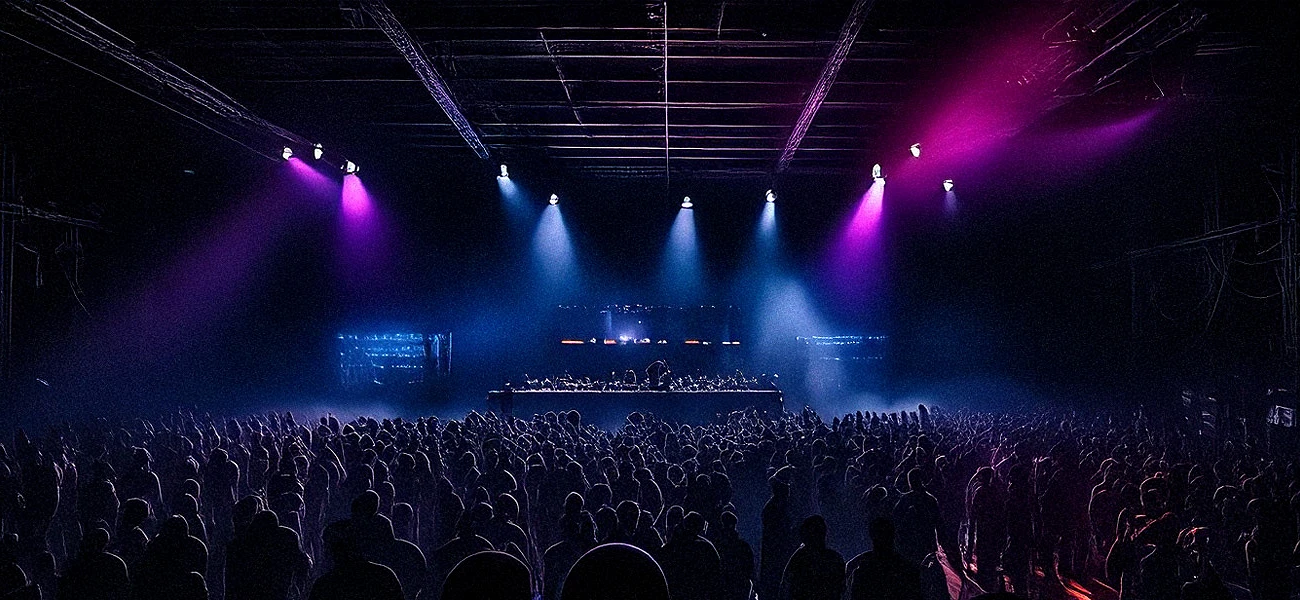
Somewhere around two in the morning, the room changes. Not dramatically. No announcement, no sudden gear shift. Just a subtle shift in the air. People are deeper into the music now. Conversations have faded. The bar queues thin out. What is left is the dancefloor, the system, and a crowd that has settled into the night.
And this is usually when certain drum and bass tracks suddenly make sense.
The kind that might feel a little too sparse at midnight. The ones with long intros, or brooding atmospheres, or basslines that creep rather than explode. Earlier in the night they can feel almost hesitant. Later, though. Different story entirely.
At two in the morning, those records land exactly as they should.
The difference between energy and tension
Early parts of a drum and bass set tend to run on energy. DJs want movement straight away. Big drums, clear hooks, obvious drops. Tunes that grab attention within the first 30 seconds.
It makes sense. People are arriving, finding their place, adjusting to the room. The music has to compete with chatter, movement, that slightly restless early crowd energy.
But by the time the night edges past one, something shifts. The dancefloor settles. People stop testing the room and start living inside it. DJs feel it immediately. You can start taking your time a bit.
That is where the slower-burn records start to breathe.
Tracks with long, uneasy intros. Basslines that glide rather than punch. Drum patterns that feel almost restrained. In another context they might feel understated. In a full room at two in the morning, they feel heavy in a completely different way.
Why space matters on a big system
One of the strange truths of drum and bass is that the biggest tracks are not always the busiest ones.
In fact, the opposite is often true.
When a room is properly locked in, space becomes powerful. A kick and snare with room around it can feel enormous. A bassline that leaves gaps can pull the crowd forward rather than batter them backwards.
You hear this clearly in a lot of darker techstep, deeper rollers, and certain jungle records. The architecture of the tune is lean. Fewer obvious fireworks. But the tension sits there, simmering.
And on a proper system, that restraint carries weight.
Sub frequencies stretch further when they are not fighting a wall of midrange. Drum hits land harder when they are not buried under layers of sound design. It is the difference between pressure and noise.
Producers who understand that tend to design tracks with patience built in. Not everything needs to explode immediately. Sometimes the groove just rolls forward, steady and slightly ominous, until the room falls into step with it.
The psychology of the late-night crowd
There is also a human side to all this.
By two in the morning, the crowd has changed. Not literally, most of the same people are still there. But the mindset is different. The night has stripped away the surface energy.
People are deeper in it now.
The dancers who were unsure earlier are either fully committed or have drifted to the edges. The ones left in the centre of the floor are the people who want to be there. The ones who stay when the lights are low and the music gets slightly stranger.
That shift gives DJs permission to explore.
Tunes that might feel awkward earlier suddenly feel hypnotic. A rolling groove can stretch for minutes without losing attention. Slightly darker atmospheres start to feel immersive rather than difficult.
It is not that the music has changed. The room has.
Records built for that moment
Some producers clearly understand this part of club culture. You can hear it in the structure of their music.
Long intros are one clue. Instead of rushing to the drop, the track slowly builds atmosphere. Pads creep in. Percussion sketches the groove. Sub frequencies hover in the background before the full weight arrives.
There is confidence in that kind of arrangement. The producer is assuming the DJ has the space to let the record unfold.
And when that assumption is correct, when the dancefloor is ready for it, the effect is hard to replicate with more obvious material.
The crowd leans forward slightly. Heads nod. The groove takes over almost without anyone noticing.
It is subtle, but powerful.
The role of DJs who trust the room
Of course, none of this works without the right DJ instinct.
Playing deeper or more spacious tracks too early can flatten a room. The energy simply is not there yet. But a DJ who reads the crowd well knows exactly when that window opens.
Sometimes it is just after the peak of a big run of double drops. Sometimes it arrives quietly, when the room has reached that steady, rolling momentum.
That is the point where a darker, slower-burning tune can change the atmosphere completely.
The drop might not be explosive. In fact, sometimes it barely feels like a drop at all. Just a shift in gravity. The bass settles in, the drums tighten up, and suddenly the whole floor moves together.
Those moments rarely look dramatic from the outside. But if you are inside the room, you feel it instantly.
Why those tracks rarely dominate playlists
There is a funny side effect to this.
Many of the records that shine at two in the morning are not the ones dominating playlists or streaming charts. They can sound slightly restrained in isolation. Without the room, without the sub pressure, without the collective momentum of a crowd.
Listening at home, they might even feel understated.
But club music has always worked like this. Some tracks are designed to grab attention quickly. Others are designed to hold a room once the night has properly settled in.
The latter rarely shout about themselves.
They simply wait for the right moment.
And when that moment arrives, when the room is deep in the early hours and the music has settled into a steady pulse, those records suddenly reveal what they were built for.
Two in the morning. Low lights. A full dancefloor. The system doing its job.
In that environment, the quieter, darker corners of drum and bass often feel the most powerful of all.